HLS vs MP4: Which Video Streaming Format Is Better for Modern Websites?
Video has become one of the most important types of content on the internet. Whether you run an online course platform, a membership website, a movie streaming service, or a social media application, choosing the right video delivery format directly affects user experience, bandwidth usage, and content security.
Two of the most commonly used formats today are MP4 and HLS. While both can deliver high-quality video, they are designed for different purposes and offer very different capabilities.
In this article, we compare HLS and MP4 in detail to help developers and business owners choose the best solution for modern video streaming.
What Is MP4?
MP4 is one of the most widely supported video container formats. It combines video, audio, subtitles, and metadata into a single file that can be played directly by browsers, desktop applications, and mobile devices.
Its simplicity makes MP4 an excellent choice for downloading files or embedding short videos on websites.
Advantages of MP4:
- Simple to host
- Universal browser compatibility
- Fast implementation
- Excellent for downloadable content
- Small overhead
However, MP4 was never designed for large-scale video streaming.
What Is HLS?
HTTP Live Streaming (HLS) is a streaming protocol developed to deliver video in small segments instead of one large file.
Rather than downloading an entire video before playback, users receive small video chunks continuously while watching. This makes streaming smoother and more reliable under different network conditions.
Modern streaming platforms such as online learning systems, movie websites, IPTV services, and premium video platforms commonly use HLS because it provides adaptive streaming and stronger content protection. HLS has become a de facto industry standard for large-scale video delivery.
Adaptive Bitrate Streaming
One of the biggest advantages of HLS is adaptive bitrate streaming.
Instead of forcing every viewer to watch the same video quality, HLS automatically switches between multiple resolutions depending on the user's internet speed.
For example:
- 240p
- 360p
- 480p
- 720p
- 1080p
- 4K
This ensures smooth playback without constant buffering.
MP4 cannot perform this automatically because the entire file is delivered as a single resource.
Better Security
Premium video content requires more than simple file hosting.
HLS allows developers to implement advanced security features including:
- Signed URLs
- Token authentication
- Domain restrictions
- Anti-hotlink protection
- Dynamic watermarking
- Expiring playback links
- CDN authorization
These techniques make unauthorized sharing much more difficult than exposing a direct MP4 file.
CDN Optimization
Another advantage of HLS is its excellent compatibility with Content Delivery Networks.
Since videos are divided into small segments, CDN edge servers can cache each segment independently, reducing latency and improving playback performance worldwide.
This architecture scales much better than serving large MP4 files directly from a single origin server.
Bandwidth Efficiency
Large MP4 files consume bandwidth regardless of whether viewers finish watching.
With HLS, users only download the video segments they actually watch.
This reduces wasted bandwidth and helps lower infrastructure costs for websites with high traffic.
Device Compatibility
Today almost every modern browser, smart TV, mobile device, and streaming application supports HLS playback through native players or JavaScript libraries.
Combined with adaptive streaming, HLS delivers a more consistent experience across multiple devices.
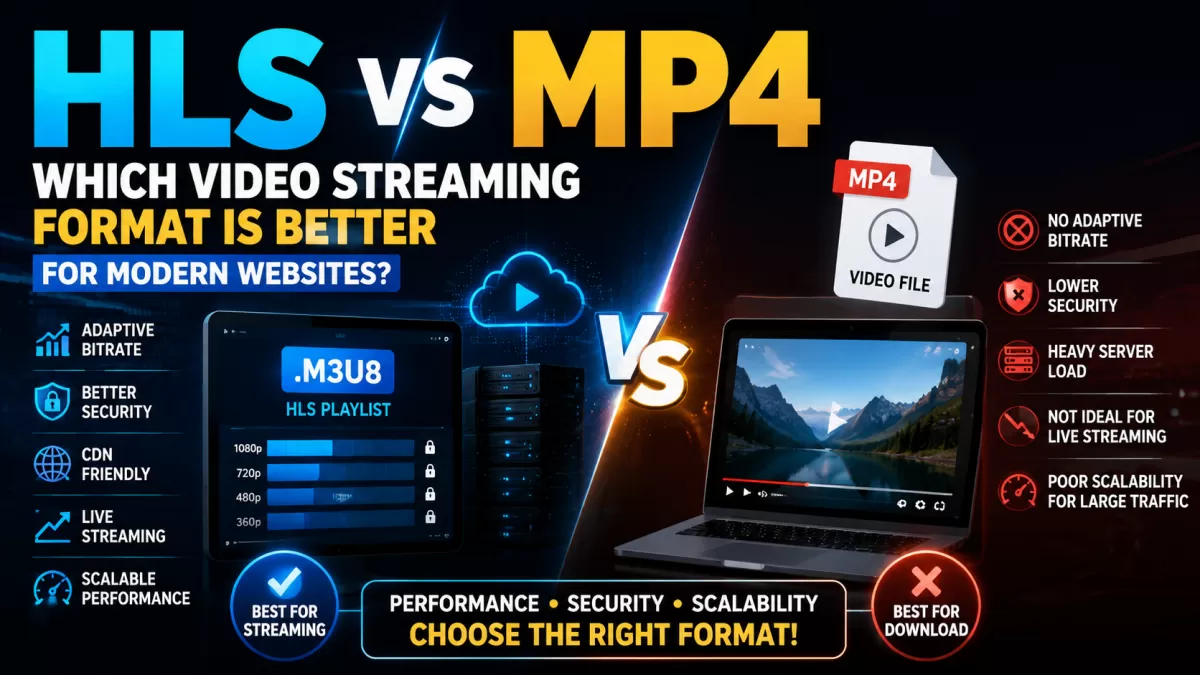
HLS vs MP4 Comparison
| Feature | MP4 | HLS |
|---|---|---|
| Adaptive Bitrate | No | Yes |
| CDN Friendly | Limited | Excellent |
| Large Scale Streaming | No | Yes |
| Anti-Hotlink | Limited | Advanced |
| Signed URLs | No | Yes |
| Token Authentication | No | Yes |
| Multi-CDN Support | Limited | Yes |
| Premium Content Protection | Basic | Advanced |
| Live Streaming | No | Yes |
| Video Security | Low | High |
When Should You Use MP4?
MP4 is suitable for:
- Product demo videos
- Marketing videos
- Small business websites
- Downloadable content
- Personal portfolios
When Should You Use HLS?
HLS is recommended for:
- Online course platforms
- Video membership websites
- Premium content
- OTT streaming services
- IPTV systems
- Movie streaming platforms
- Anime websites
- Enterprise video portals
- Short video platforms
- Large-scale video delivery
Final Thoughts
Both MP4 and HLS have their place in modern web development.
If your goal is simply embedding a few videos on a website, MP4 remains a practical solution.
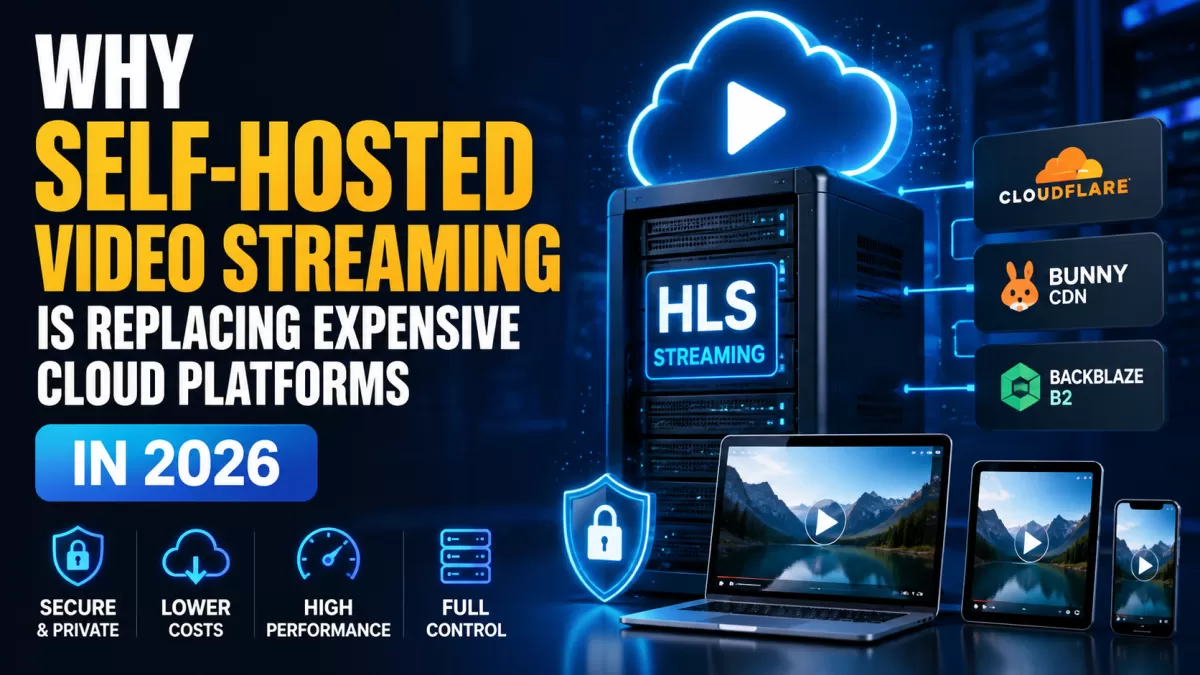
However, if you plan to build a professional streaming platform with strong security, adaptive playback, CDN acceleration, and scalable infrastructure, HLS is the better long-term choice.
As video traffic continues to grow every year, investing in a secure HLS streaming infrastructure provides better performance, lower operational costs, and greater flexibility for future expansion.